Realtime Arbitrage Platform
A full-stack algorithmic trading solution designed to discover cross-exchange market inefficiencies in real-time.
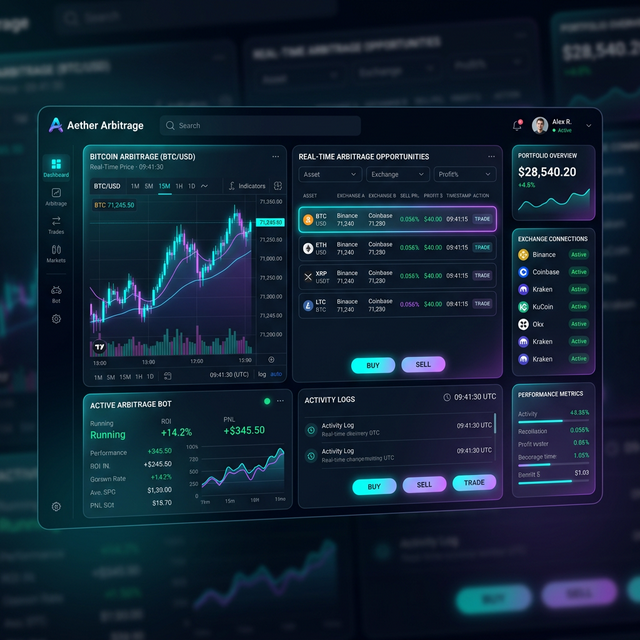
Project Overview
The Arbitrage Flow Project is a production-ready Web App designed for a real-time arbitrage trading dashboard SaaS. It operates by scanning multiple exchanges simultaneously to identify price discrepancies and calculates guaranteed profit margins after trading fees.
Built with a highly concurrent architecture, this system ingests millions of events per hour and processes them through a custom-built low-latency algorithm. The user interface provides traders with an elegant, dark-themed dashboard updating dynamically via WebSockets without requiring a page refresh.
Key Features
- Real-time WebSocket Data Feeds
- Live PnL & Margin Calculations
- Customizable User API Key Management Settings
- High-Speed NoSQL Ingestion
- Production-ready Security Configurations
Technologies Used
A modern and resilient technology stack was selected to ensure maximum uptime, incredibly low latency, and a premium user experience.
- Backend: Python / FastAPI / C# .NET
- Frontend: React.js
- Styling: Bulma CSS / Glassmorphism
- Hosting/DB: Docker Compose / Firebase
Frequently Asked Questions
How does the Budget 2026 STT hike affect arbitrage in India?
Starting April 1, 2026, the STT on Futures sales increases from 0.0125% to 0.05%. WebAI Solution automatically audits this 4x tax increase in our rollover logic to ensure your net-net returns remain positive.
What is the benefit of a Cash-Futures rollover vs. squaring off?
Squaring off requires selling the cash leg, triggering a 0.1% STT. Rolling over to the next month's future allows you to maintain the cash position, avoiding the higher cash exit tax while capturing the new month's basis spread.
How does WebAI Solution protect against India VIX spikes?
Our AI Supervisor monitors the India VIX in real-time. If volatility exceeds 22, the platform automatically flags 'Slippage Risk' and pauses new arbitrage signals to protect capital from wide bid-ask spreads.